
Current buying guide · checked September 2, 2026
Indochino Premium vs Luxury shirts: what actually changes?
The useful answer is not hidden in the tier name. It is on the individual product page: fabric, weight, composition and whether that particular cloth suits the way you will wear it.
I have bought and worn Indochino shirts over many years. Current prices and specifications below come from Indochino and can change. Merchant links currently earn no commission.
Short answer: buy the fabric, not the word “Luxury”.
In the current examples I checked, Luxury cost only more and used somewhat heavier cloth. That is useful information, but it is not proof of a universal quality upgrade across the whole tier.
Which tier should you buy?The current comparison
A modest price step, but a real change in cloth
I checked four live product pages rather than treating the collection labels as specifications. Two Lea shirts represented Premium; two Hyde shirts represented Luxury. This is a useful snapshot, not a claim about every shirt Indochino sells.
Premium: Lea Washed
9- Material
- 100% cotton
- Weight
- 113–114 GSM in the navy and light-blue examples
- Read
- Lightweight cloth; judge the washed finish and colour on their own merits
Luxury: Hyde
9- Material
- 100% cotton
- Weight
- 131 GSM in the deep-blue and dark-navy stripe examples
- Read
- Heavier than the two Lea examples; not automatically better for every season
Prices and specifications are merchant-supplied US data observed on September 2, 2026. Promotions, availability and regional pricing can change.
What the labels mean
Premium and Luxury are collections, not complete verdicts
A tier name is a useful way to organize a shop. It is a poor substitute for reading the product details.
The Premium shirts I checked were lighter. The Luxury examples were heavier, and the wider Luxury range also included different compositions: one current Jarrod product mixed cotton, wool and stretch, while a Hawthorn example used 100% cotton at 142 GSM. That variety is precisely why “Luxury is better” is too simple.
What to compare: composition first, then fabric weight, weave, colour and intended use. A lighter cotton shirt can be the better summer purchase. A heavier cloth can drape more cleanly and still be the wrong choice on a hot day.
Both tiers use Indochino’s made-to-measure ordering and customization system. Paying for Luxury does not buy a different body, a more accurate measurement profile or a guarantee that the first fit will be right.
Construction choices
The options that matter are mostly the quiet ones
Indochino currently offers enough collars, cuffs, fronts and back constructions to make the configurator feel like the main event. It is not. The shirt still has to fit, stay tucked and work with the clothes around it.
Choose for how you dress
A collar worn with a tie has a different job from an open casual collar. Proportion it to your face and jacket rather than picking the most unusual option.
Fused or soft
Indochino says Standard collars and cuffs are fused, while Soft versions have no fusing. That changes structure and feel more directly than the collection label.
Dress shirts should stay tucked
The current customization guide says dress shirts have an extended front and back; casual shirts are shorter. For me, this is not a small detail.
Let the placket serve the shirt
I prefer a visible placket on casual button-down shirts and a cleaner front on more formal ones. The choice should have a reason.
Coloured buttonholes and a prominent monogram can certainly announce that a shirt is custom. They do not improve it. My rule remains simple: a custom shirt should look custom because it fits.
My ownership evidence
Sixteen years tell me something—but not everything
I began buying Indochino shirts early in my career because ordinary shirts were often too short for my long torso. Some of those shirts are still with me almost 16 years later.
That is encouraging, but it is not a controlled durability test. I treated them carefully, built a rotation and avoided wearing and washing the same shirt constantly. Their age says something about what careful ownership can achieve; it does not predict how every current fabric will wear.
The fit also stopped working before the cloth did. After I gained muscle, the old shirts became too tight through the shoulders and biceps. Good made-to-measure clothing is still made for a particular version of your body.
The preserved 2013 Premium-shirt review below reached a similar, narrower conclusion: the Thomas Mason fabric felt softer and more luxurious, while the fit was no different from the standard Indochino shirts already owned. That observation belongs to 2013; it is historical evidence, not a current product test.
The buying decision
Which Indochino shirt tier should you choose?
The cloth already fits the job
You like the actual fabric, want a lighter shirt or would rather put the difference toward a second useful colour.
The specific fabric earns it
You prefer that shirt’s composition, weight, weave or finish—not simply the more expensive label.
My checkout order
- Start with the fabric composition and weight.
- Decide whether the shirt is formal, casual or expected to do both.
- Fix collar, cuff, length and fit before decorative details.
- Order conservatively until the measurement profile has survived a wash and a full day of wear.
- Compare the final price, not the tier name.
Common questions
Premium vs Luxury, without the sales shorthand
Are Indochino Luxury shirts better than Premium shirts?
Not as a universal rule. In the examples checked, the Luxury Hyde shirts used heavier cotton and cost more than the Premium Lea shirts. The wider ranges contain different fabrics, so compare the particular products.
Do Luxury shirts fit better?
No fit advantage is established by the tier itself. Both use Indochino’s measurement and customization process. Profile accuracy and the resulting garment matter more.
Are Indochino shirts long enough to stay tucked?
Indochino says its dress-shirt pattern uses an extended front and back, while casual shirts are shorter. My older dress shirts stayed tucked well, but a current order still needs to be judged on its own fit.
Is heavier fabric always better?
No. Weight affects drape, warmth and feel. The right choice depends on climate, layering and how formal you want the shirt to appear.
Sources & methodology
What is firsthand and what comes from Indochino
The ownership and fit observations are mine. Current prices, GSM figures, compositions and customization descriptions are merchant-supplied. I compared individual live product pages because collection labels alone do not establish a consistent construction or quality difference.
The original 2013 review
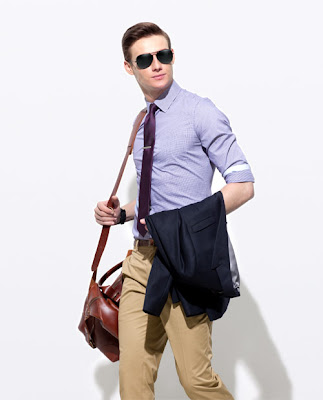
Some recent news give us some more insights on where Indochino is going with their shirts. Remember last year suits got updated with better components and more attention to detail. Shirts now got the same treatment – a host of new options combined with quality improvements. Let’s have a look at the new options and improvements:
- Contrast collars and sleeve cuffs (inside colours)
- 18 stitches per inch
- Longer back
- Last button placed horizontally
- No placket option
- Freudenberg interlinings
- Streamlined collar selection